
If you enjoy cultural debates in countryball stories, you may also like our political satire on global power in
How Spanish Empire Gold Built Global Power – A Countryball Plush History Satire.
For more plush storytelling about tension and identity, read
Holiday Destroyer – A Countryball Plush Story About Trust and Political Tension.
Introduction
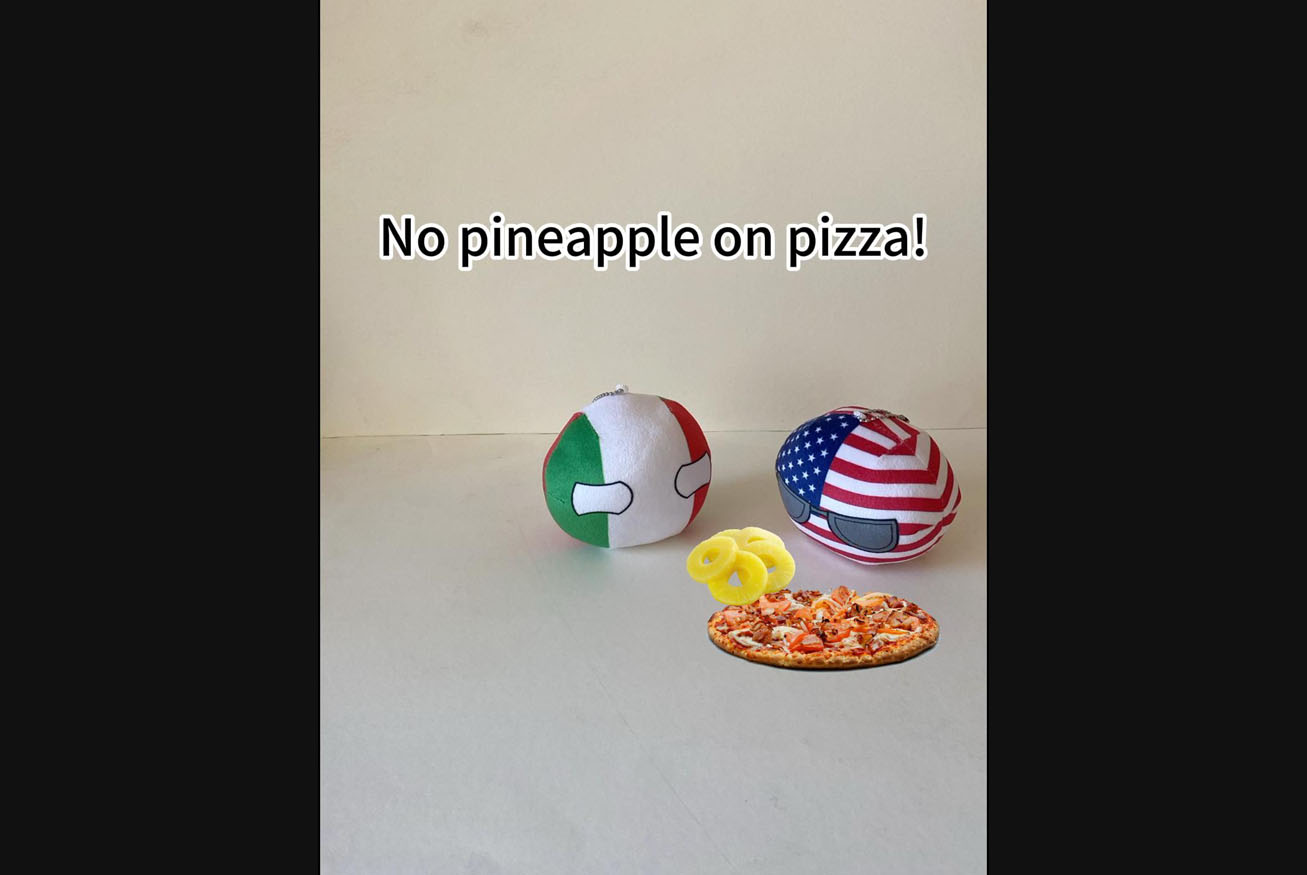
No pineapple on pizza — that is where this countryball debate begins.
In this playful countryball plush short, a harmless pizza turns into a global debate. Pineapple slices spark outrage. Tradition clashes with modern creativity. Nations argue, defend their identities, and question what “authentic” really means. Is food sacred heritage, or is it meant to evolve? Behind the humor and soft plush characters lies a surprisingly relatable question about culture, globalization, and change. Many people strongly believe in the rule of “no pineapple on pizza” as a matter of culinary tradition.
Why Italy Reacts So Strongly
When Italy shouts, “No pineapple on pizza!”, it is not just about taste.
Pizza is deeply connected to Italian heritage. For many Italians, traditional recipes are part of national identity. Changing the toppings can feel like changing history itself.
In this short, Italy represents the voice of cultural preservation. The emotional reaction reflects how people often respond when long-standing traditions are altered.
Canada and the Idea of “Modern Pizza”
“I just made a modern pizza.”
This line subtly references the origin of Hawaiian pizza, which was actually invented in Canada in the 1960s.
Canada’s role in the story symbolizes culinary innovation. When food spreads globally, it adapts to local tastes. New ingredients are added. Old rules are questioned.
The tension between Italy and Canada represents the broader debate between authenticity and creativity.
Seafood, Curry, and Globalization
As Japan adds seafood and India adds curry, the pizza becomes even more international.
At this point, the pizza is no longer purely Italian. It becomes a global platform — a base that different cultures reshape according to their own flavors.
This mirrors real-world globalization. Once an idea spreads, it evolves beyond its original form.
The History Behind the Pineapple Debate
The famous Hawaiian pizza was created in Canada in 1962 by Sam Panopoulos. Despite the name, it has no direct connection to Hawaii. The combination of sweet pineapple and salty ham quickly became controversial. For some, it was a creative twist. For others, it was culinary betrayal.
This real-world history makes the “no pineapple on pizza” argument even more interesting. What started as an experiment became a global controversy.
Globalization and Identity
The debate over “no pineapple on pizza” is not really about fruit. It is about identity. In a globalized world, food travels faster than culture can adapt. Recipes cross borders, ingredients mix, and traditions are constantly challenged. For some, this is exciting. For others, it feels like losing something sacred.
This is why the countryball debate feels familiar. Behind the humor, it reflects a deeper tension between preserving heritage and embracing change.
The Deeper Meaning
On the surface, this is a lighthearted food debate.
Underneath, it reflects:
- Tradition vs. innovation
- Cultural ownership vs. global adaptation
- Identity in a connected world
The plush countryballs make the discussion playful, but the theme is surprisingly relevant.
Conclusion
So, should pineapple be on pizza?
The answer depends on perspective.
Traditions deserve respect. But cultures also grow through exchange.
Maybe the real message of this short story is simple:
Debate is part of evolution.
And sometimes, even pizza can tell a story about the modern world.